
Last updated November 20, 2026
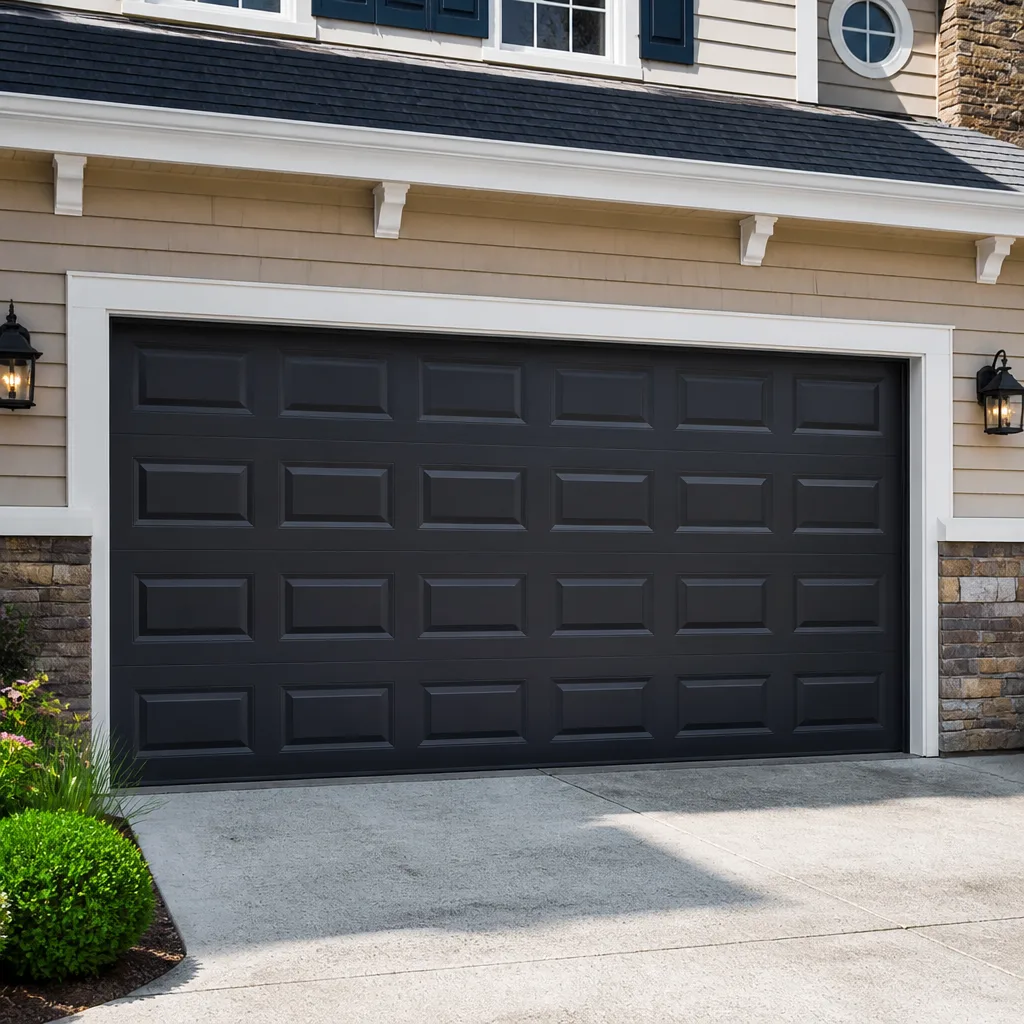 Raised-panel steel
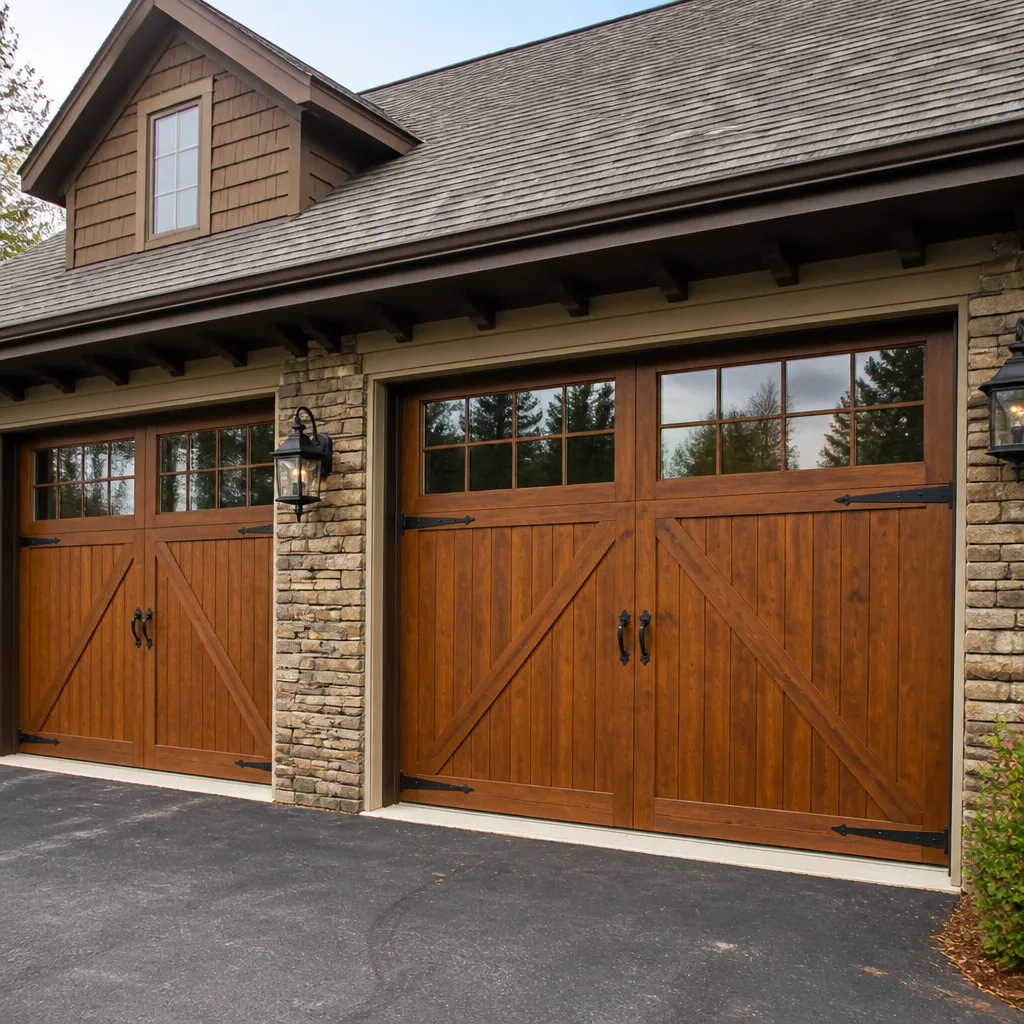 Carriage house
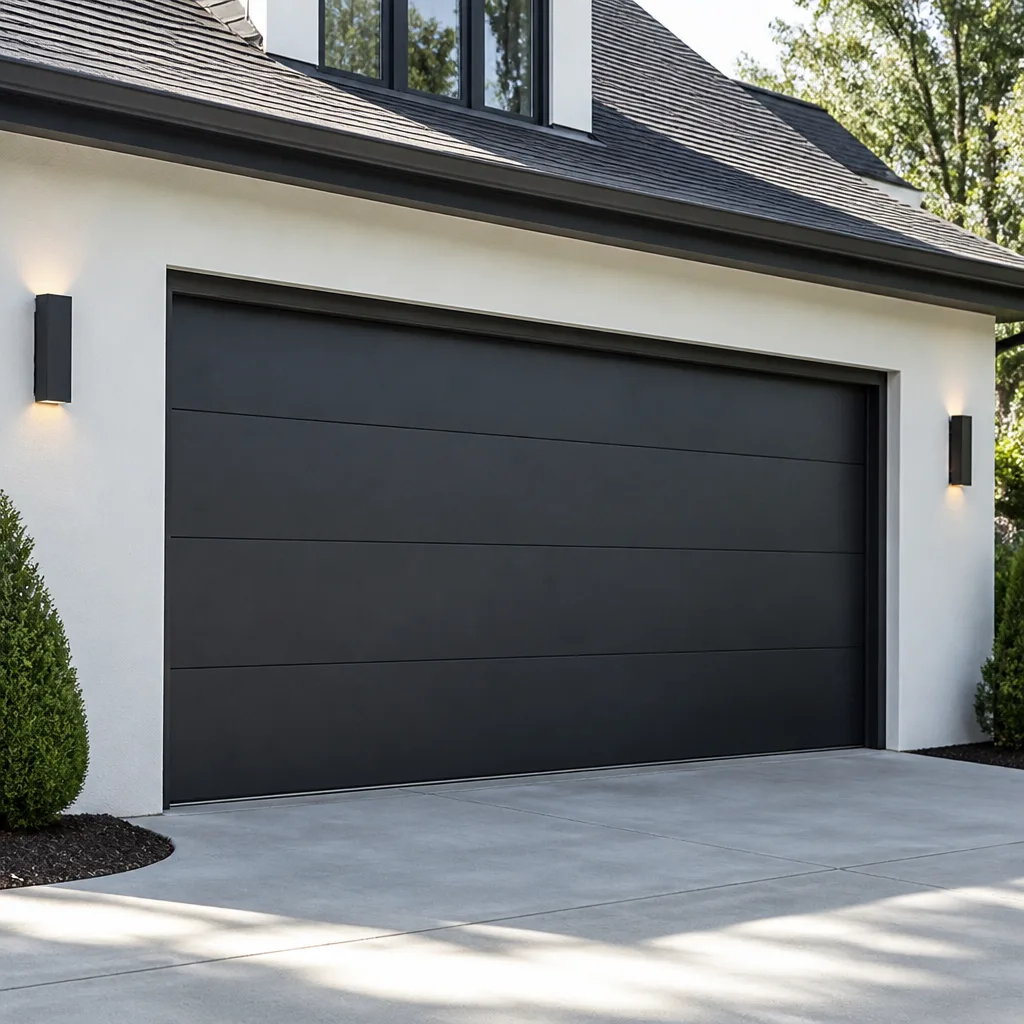 Modern flush
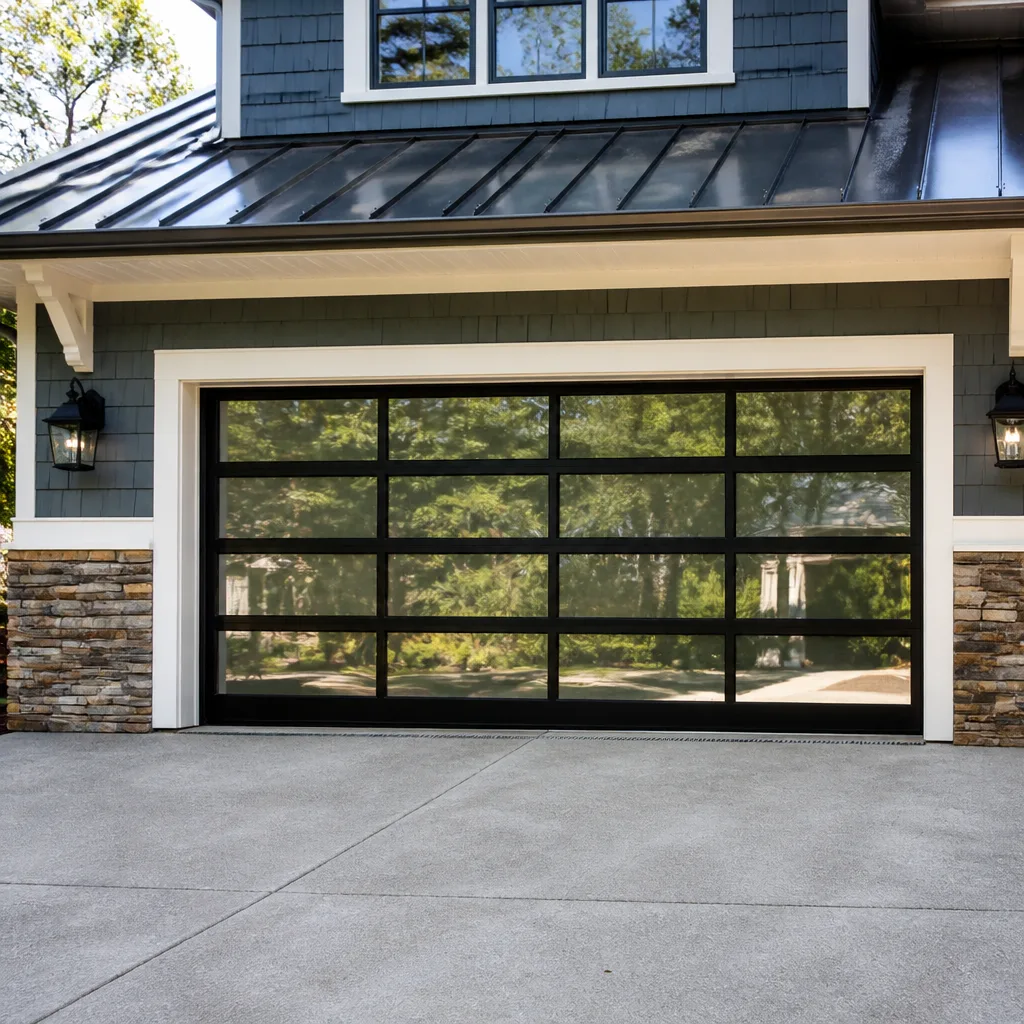 Full-view glass
 LiftMaster openers
 Chamberlain openers
Full 25-point door and opener safety check with every visit - springs, cables, rollers, tracks, and your LiftMaster or Chamberlain opener included
You get a price before we start. It does not change when the pro arrives.
Get your free estimateGarage Door Warning Signs: A West Park Homeowner’s Reference Guide
A garage door that hesitates for half a second before moving isn’t “getting old” – it’s telling you the spring tension is off, the opener is compensating with extra torque, and the motor is working harder than it should on every single cycle. Most doors announce failure long before they actually fail. The problem is that few homeowners know what normal looks like, so abnormal slips past unnoticed until a spring snaps at seven in the morning and the car is trapped inside. This guide is a symptom-to-cause map for West Park homeowners: what each groan, jerk, scrape and rattle usually means, which symptoms are safe to watch, and which need a technician the same day.
Quick Answer
Warning signs that need same-day attention are a snapped torsion spring, a frayed or hanging cable, a door that’s come off its tracks, and any door that reverses or won’t close fully. Symptoms you can monitor for a few days include mild squeaking, slow opener speed and minor panel vibration. Cold-morning stiffness in January is normal in West Park; the same stiffness in July usually means worn springs, dry hinges or a failing opener.
Styles & brands we work with
- Raised-panel steel
- Carriage house
- Modern flush
- Full-view glass
- LiftMaster openers
- Chamberlain openers
Table of Contents
- The Symptom Index: What Each Sound Usually Means
- Symptoms You Can Monitor vs. Symptoms That Need Same-Day Attention
- Reading Your Door Right From the Ground: Visual Signs by Component
- Torsion Springs: Spotting One Under Insufficient Tension
- Worn Cables and Misaligned Tracks
- When Your Opener’s Behavior Is Really About the Door
- How Ohio Weather Changes What’s Normal in West Park
- A Simple Seasonal Inspection Routine
The Symptom Index: What Each Sound Usually Means
Garage doors are mechanical systems with a limited vocabulary. When something is wrong, they tend to speak up before they break down. Here’s how each of the four common sounds maps to its most likely mechanical cause.
Grinding
A low, continuous grinding sound, especially near the opener motor or along the curved track, usually points to worn rollers, a dry torsion spring or a bent rail the trolley is scraping against. Persistent grinding that gets worse over a week or two is easy to ignore and easy to fix early – it’s the cheapest sound to catch.
Popping
A single sharp pop when the door first moves, or a series of pops during travel, is the classic sound of a torsion spring under uneven tension, or a top panel flexing against a worn hinge. Popping is a spring-symptom until proven otherwise. A spring under stress is a high-tension component; do not try to investigate it by hand.
Scraping
Scraping usually means metal is contacting metal where it shouldn’t: a derailed roller rubbing the track, a panel edge catching the frame, or a misaligned bottom seal dragging on the slab. If the scraping appeared suddenly after a bump to the door, check for off-track alignment – but only with the door fully closed and the opener disengaged.
Rattling
Loose bolts are the most common culprit, along with worn vibration isolators at the opener mount or a loosening chain in a chain-drive opener. Rattling is the least urgent sound on this list, but it accelerates wear on every part it touches.
If you can’t isolate which sound you’re hearing, that’s the point at which an experienced technician can usually identify the cause in a few minutes with the door closed. Our experience across LiftMaster, Wayne Dalton and Raynor systems is that sound alone gets you 80% of the way to a diagnosis.
Symptoms You Can Monitor vs. Symptoms That Need Same-Day Attention
The single most useful skill in this reference is knowing which symptoms can wait and which can’t. Here’s the split we use.
Monitor for a few days (safe)
- Mild squeaking or a light grind that doesn’t change intensity
- Opener running slightly slower than usual but completing the cycle
- Loose bolts or a vibrating panel
- Weather seal dragging on the floor
- A remote that occasionally needs a second press (usually a battery or programming issue)
Same-day attention
- Broken torsion spring – the door won’t lift without the opener straining, or the door is dead weight
- Frayed cable – a single broken strand is a warning; add the full cable replacement to the schedule within days, not weeks
- Door off its tracks – do not operate it, even once. An off-track door under opener tension is the most dangerous state a garage door can be in
- Door reversing mid-cycle or refusing to close – a real security gap and a sign something in the door or safety sensors is failing
- Any opener that smokes, smells hot or trips the breaker – stop using it and call us
If any symptom on the second list shows up, don’t run the door to “see if it’s still broken.” Each cycle on a compromised spring or cable tightens the load on the other one and puts more stress on the door panels.
Reading Your Door Right From the Ground: Visual Signs by Component
You don’t need to climb a ladder or touch any moving part to spot the most important failures. Everything here can be checked with both feet on the floor and the door fully closed and disengaged from the opener.
Springs
Look at the torsion bar above the door. A healthy spring sits flush and evenly coiled. A spring with a visible gap of a half inch or more between its coils is under less tension than it should be – a sign the spring is stretching or winding down. That is the door’s way of telling you it’s about to let go.
Cables
Worn cables are usually visible near the drums at the top corners. Healthy cable is tight, even and the same color its whole length. Warning signs: broken strands (it will look furry), a slack cable lying loose along the track, or a cable that’s jumped the drum and is riding on the outside edge.
Tracks
From the ground, sight along each vertical track from bottom to top. Both sides should be parallel. Any bow, dent, kink or gap between the roller and the inside of the track is a misalignment sign. If one side has a slight bulge near the middle and the other doesn’t, that’s a track that has taken an impact.
Panels
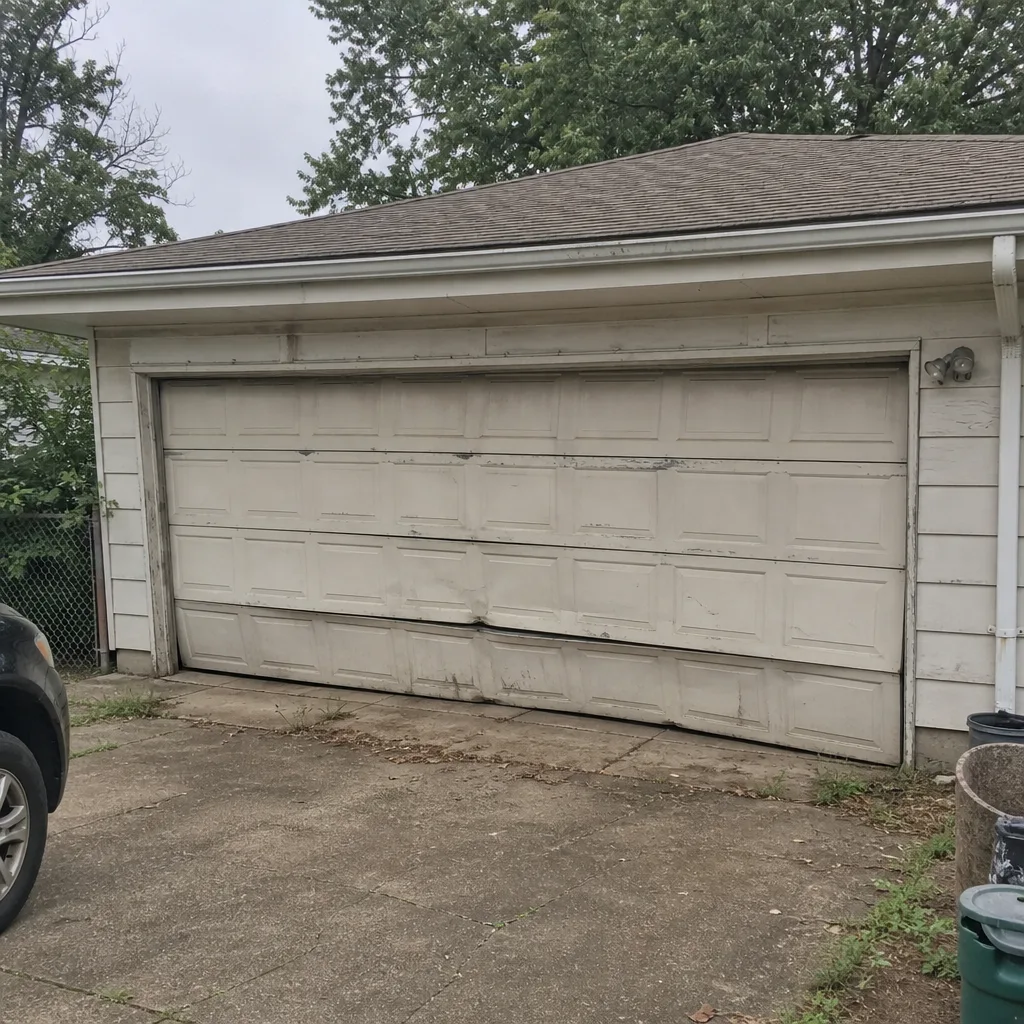
Stand directly in front of the door and look for a horizontal seam that’s no longer straight. A single panel that’s out of line with the rest points to a bent hinge, a separated panel or a door that’s been pushed in and is now binding. For a closer look at how existing damage is repaired or replaced on a West Park home, see our garage door repair page.
Torsion Springs: Spotting One Under Insufficient Tension
A torsion spring under insufficient tension is the highest-risk failure on this list. When it slips a half-turn, the door is heavier than it should be, the opener absorbs the extra weight, and every other part wears faster. When it finally breaks, it does so with a bang that most homeowners describe as a gunshot – and the door becomes dead weight attached to your car’s roof.
Springs are a high-tension component. Nobody should ever adjust, tighten or replace one by hand. A single wrong wind on a live spring can send the bar into a wall, a ceiling or a person. If you suspect a spring issue, keep the door closed, keep the car outside if it’s already outside, and call a specialist.
Signs a torsion spring may be under insufficient tension:
- Door feels much heavier when lifted manually with the opener disengaged
- Opener hesitates longer before pulling the door up
- Door drops faster than usual on the way down, or slams at the bottom
- Visible coil gap of a half inch or more
- Grinding or popping concentrated near the torsion bar
Spring repair is a specialty at West Park Garage Door Repair Pros – many general handymen won’t touch it. If you’re hearing the symptoms above and want them checked before the spring goes, we can take a look and give you a straight answer about whether the spring is at the end of its life.
Worn Cables and Misaligned Tracks
Cables and tracks are the two components where a small failure becomes a big one fast. A cable doesn’t stretch slowly – it snaps, usually on a cold morning, and when it does the door hangs by one corner.
Cable warning signs
- Broken strands making the cable look furry near the drum
- Slack cable lying loose along the vertical track
- Cable jumped the drum and sitting at an angle
- Cable that’s the wrong tension between the two sides
Track warning signs
- Visible bend or kink in the vertical or horizontal track
- Rollers riding outside the track channel
- Door binding on one side as it opens (slower motion on one side than the other)
- Panel gap at the top where the door no longer meets the header seal
A single broken cable strand is not the emergency; a cable that has fully broken or jumped the drum usually is. If one cable has failed, the second is under double the load. Replace both as a set.
A misaligned track is often the result of a bump – a bicycle, a lawnmower, a car mirror – but it can also be the result of a loose bolt backing out. Either way, an off-track door has to be handled with the opener disengaged and ideally by a technician. Every West Park homeowner we speak with who has tried to “bend it back” ends up needing a new track.
When Your Opener’s Behavior Is Really About the Door
One of the most common misdiagnoses we run into is a homeowner ready to replace a perfectly good opener because the door is having problems. In most cases, the opener is the messenger, not the cause.
Hesitation before moving
When the opener clicks, pauses, then pulls, it’s compensating for door weight that’s higher than it expects. In a LiftMaster or Chamberlain system with soft-start, hesitation is the opener’s overload protection working. The real problem is almost always spring tension or a binding track.
Running longer than usual
If a door that used to complete a cycle in twelve seconds now takes fifteen, the extra time is the opener struggling against friction. Friction comes from worn rollers, dry hinges, a misaligned track or a worn spring. Fixing the door fixes the cycle time.
Reversing or refusing to close
Reversal is a safety feature. If the door reverses before it reaches the floor and nothing is blocking the safety beam, the opener is detecting resistance above its threshold. Causes include a dirty safety lens, a slightly binding track, a warped bottom panel, or a photo-eye that’s out of alignment. On a Craftsman or Genie unit, the reversal sometimes registers even when the beam is clean, because the travel limits have drifted.
What this means for you
Before ordering a new opener, find out what the door is doing. Diagnose the door first; replace the opener second, only if it’s actually failing. Our garage door opener repair service starts with door diagnosis for exactly this reason.
How Ohio Weather Changes What’s Normal in West Park
Northeast Ohio puts a garage door through a wide temperature swing every year, and some symptoms are simply the door responding to the weather. Here’s how to tell a seasonal quirk from a genuine warning sign.
In January, a garage door is stiff for the first cycle. The metal contracts, the grease thickens, and the torsion springs are slower to do their job. That first-cycle stiffness is normal in a West Park winter. If the door is still stiff on the fifth cycle, or if it hesitates permanently across the whole day, that’s a spring or lubrication issue, not the cold.
In July, the same stiffness is not normal. Warm weather should make a door easier to lift, not harder. If your door is sluggish in summer, the cause is almost always a worn spring that has lost tension, a binding track (sometimes caused by expansion of a tight frame) or a failing opener motor.
Other weather-linked signs:
- Humidity and wood-frame doors – panels can swell and drag on the track. A pulsing scrape in wet weather that clears in dry weather is usually swelling, not a mechanical failure.
- Freeze/thaw on the bottom seal – a rubber seal can freeze to the concrete slab and pull loose on the first lift of the morning. If the seal drags after a cold night but recovers, that’s thermal, not structural.
- Ice on the photo-eye – a lens fogged with condensation or coated in road spray can trigger false reversals. Wipe it and retest before assuming the opener is failing.
- Salt and road splash on lower panels – rust on a painted steel panel where road spray hits it is a West Park reality. If the rust is only surface, it’s cosmetic. If it’s eating through the panel, replace it before the panel loses structural strength.
Knowing which symptoms are seasonal and which aren’t saves West Park homeowners a lot of unnecessary service calls – and, in many cases, gives us a much better sense of what to look at when we do get called.
A Simple Seasonal Inspection Routine
This is a five-minute inspection you can run from the ground four times a year. It catches the majority of the failures on this list before they become emergencies.
- Stand in front of the door and sight the panel seams. Any horizontal seam that’s out of line with the rest is a sign of a bent hinge or a shifted panel.
- Look along both vertical tracks from the bottom up. Tracks should be parallel. Any visible bow is a track misalignment.
- Check the torsion springs above the door for a coil gap. A gap of a half inch or more means the spring is stretching. Do not touch the spring itself – just note the gap and call.
- Sight the cables near the top drums. They should look tight, even and unbroken. Fraying or slack means a cable issue.
- Listen to one full cycle, both up and down. Note any grinding, popping, scraping or rattling and which part of the cycle it appears in.
- Test the safety reversal. Place a two-by-four flat on the floor under the closing door. If the door doesn’t reverse on contact, the safety system has failed.
- Wipe the safety beams on both sides of the door. Clean lenses mean fewer false reversals.
If you find something on the list you’re not sure about, a quick free estimate is the cheapest diagnostic you’ll ever have. For a full replacement decision instead of a repair, our garage door installation team can advise on brands and panel types that match the style of a West Park home.
Common Mistakes to Avoid
- Running the door to “see if it’s still broken.” On a broken spring or a frayed cable, every cycle at power loads the other spring or cable to twice its normal range. Once you know something is compromised, keep the door closed and call.
- Assuming the opener is the problem. Most opener trouble in a West Park home is really door trouble – springs, tracks or rollers. Replacing the opener fixes the symptom for a few weeks, then the new one struggles the same way.
- Spraying WD-40 on the torsion springs. Springs need a proper garage door lubricant, not a water-displacing spray, and never on the cables. Dry hinges and rails are where lubrication belongs.
- Bending a track back with a hammer. An aluminum or steel track that’s been bent never returns to parallel, and a roller that runs in a slightly wrong channel will wear out fast. If the track took a hit, plan on a replacement piece.
- Ignoring a spring gap because the door still lifts. A door that still lifts with a spring gap is one break away from trapping the car. Fixing the spring early is a repair; waiting until it fails is a service call plus a possible panel and opener replacement.
- Replacing one cable when both are worn. Cables on a torsion system work as a matched pair. When one fails, the other is at twice its normal load. Replace both.
- Assuming a cold-morning hesitation is normal in any season. In January, yes. In July, it’s a warning sign. The same behavior across seasons is almost always a spring losing tension.
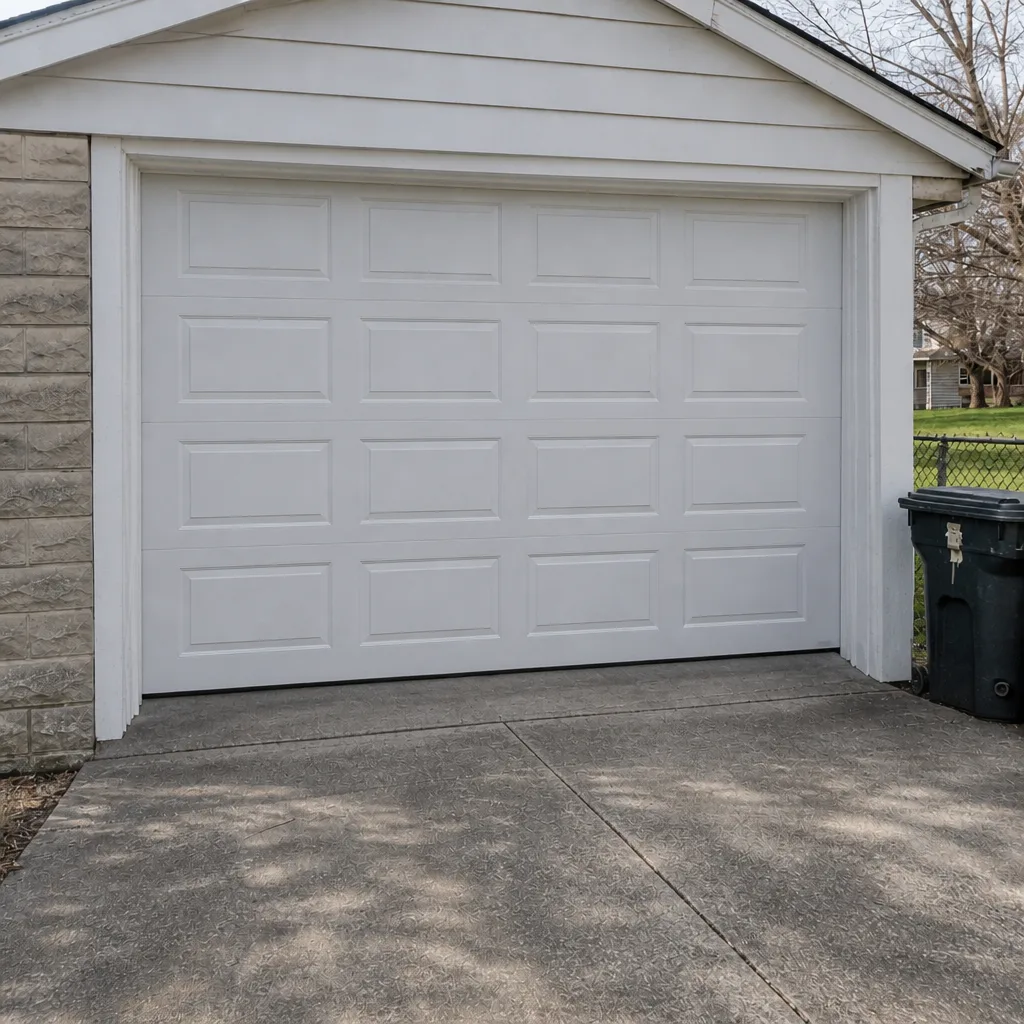
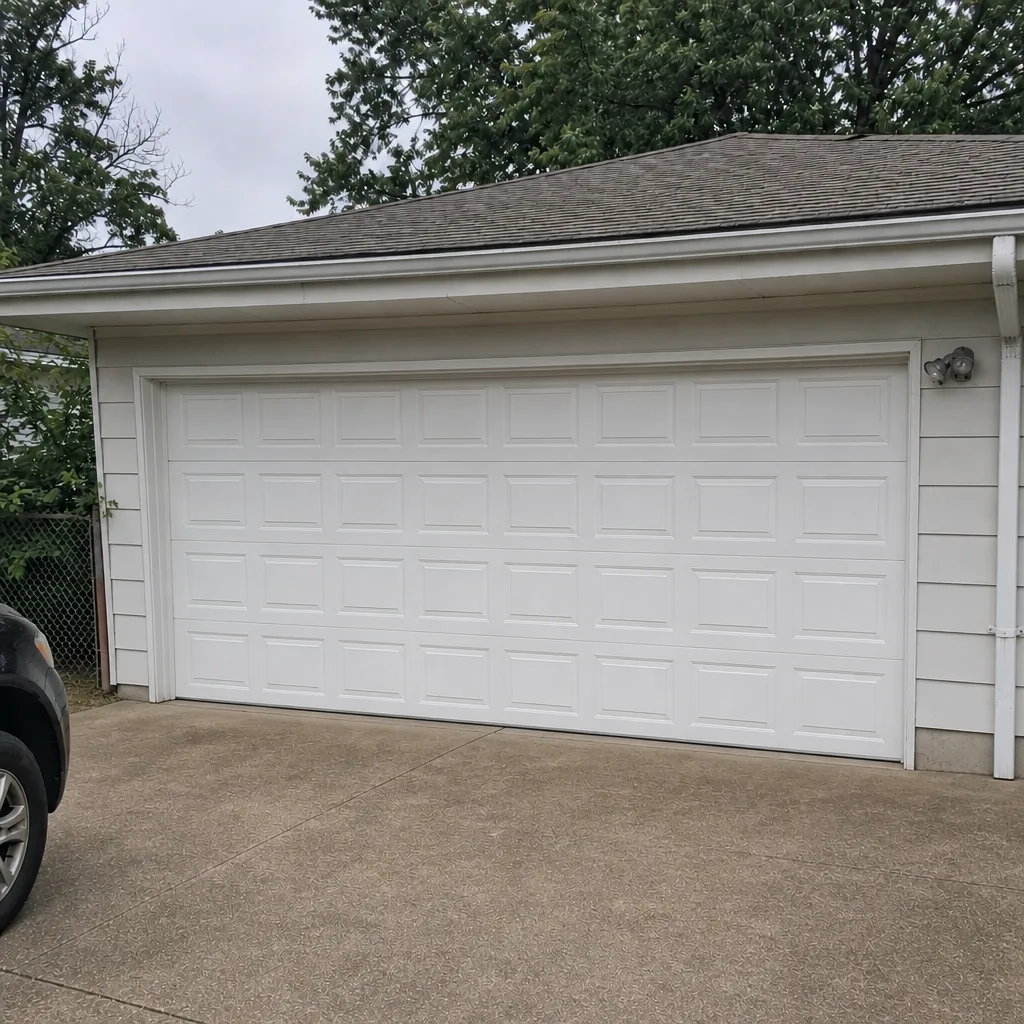
See the difference
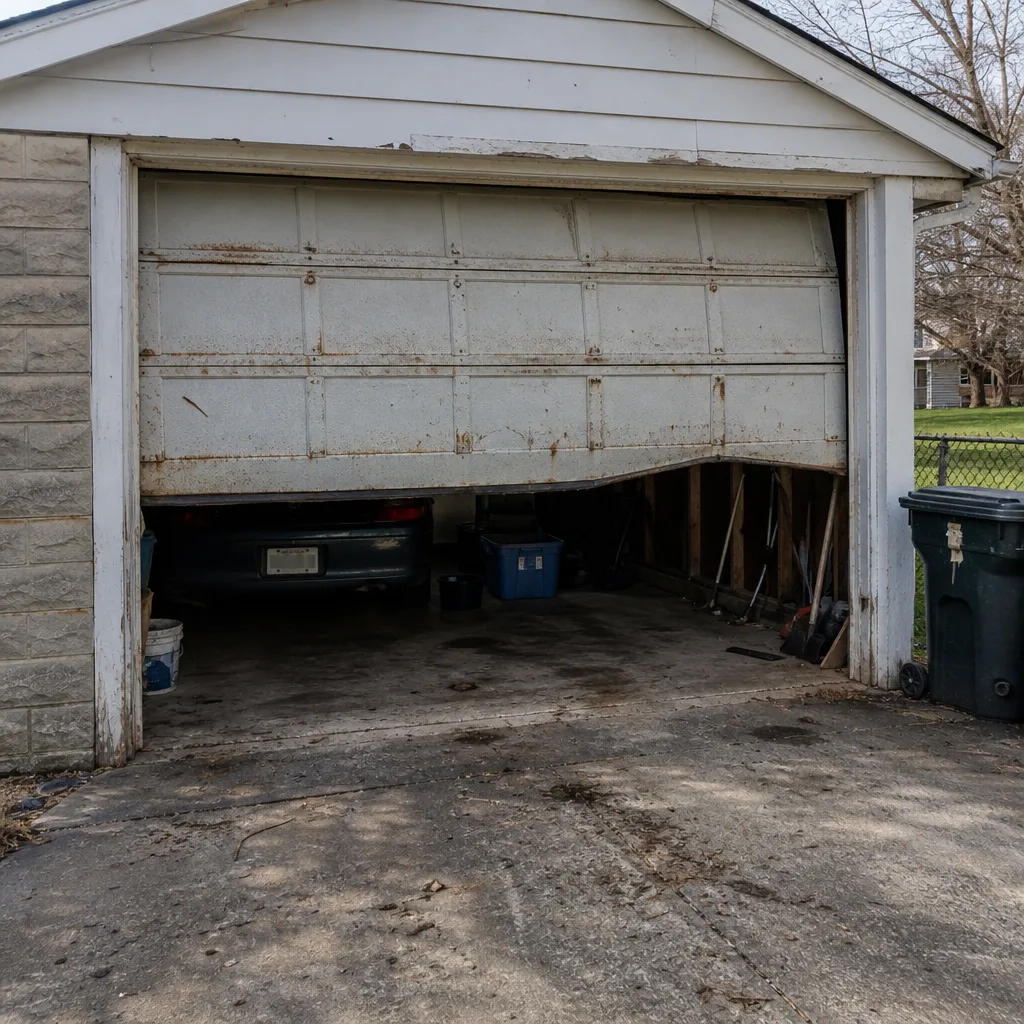 Before
 After
 Before
 After
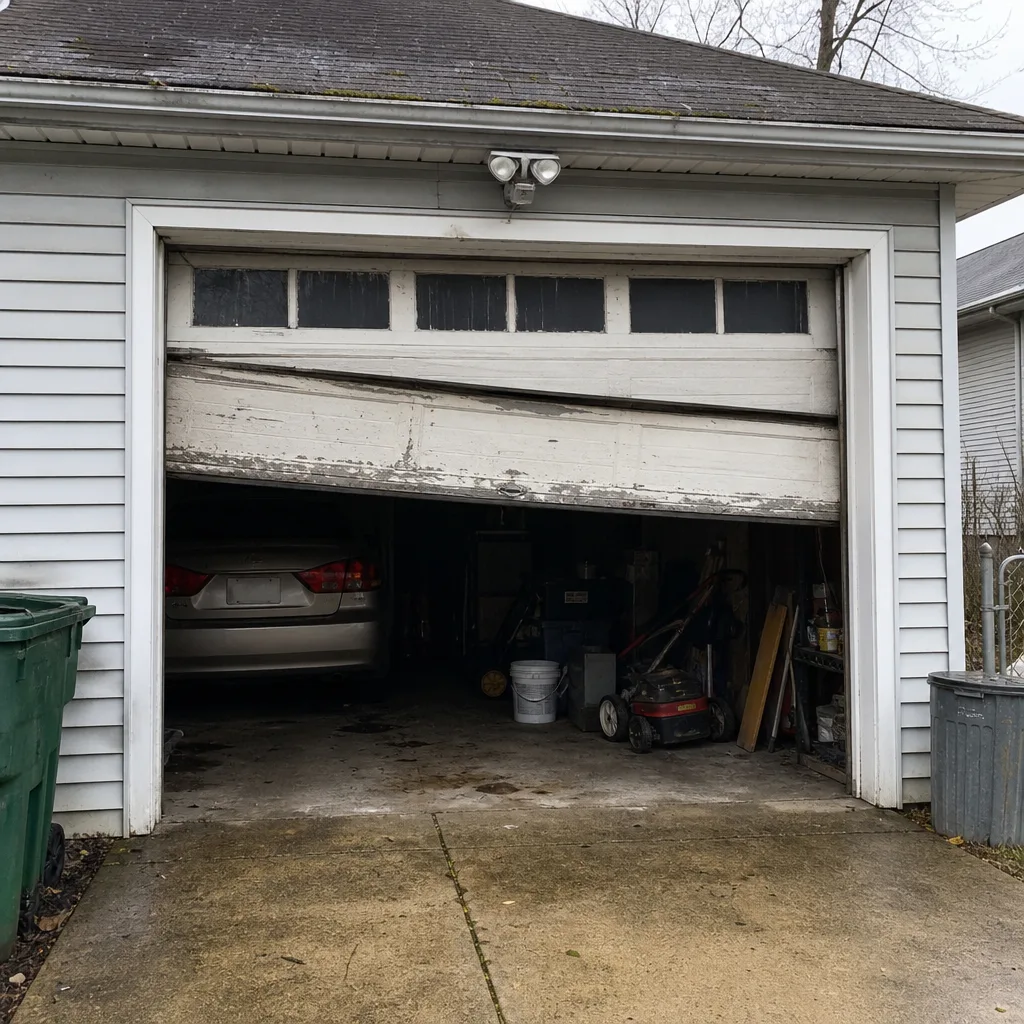 Before
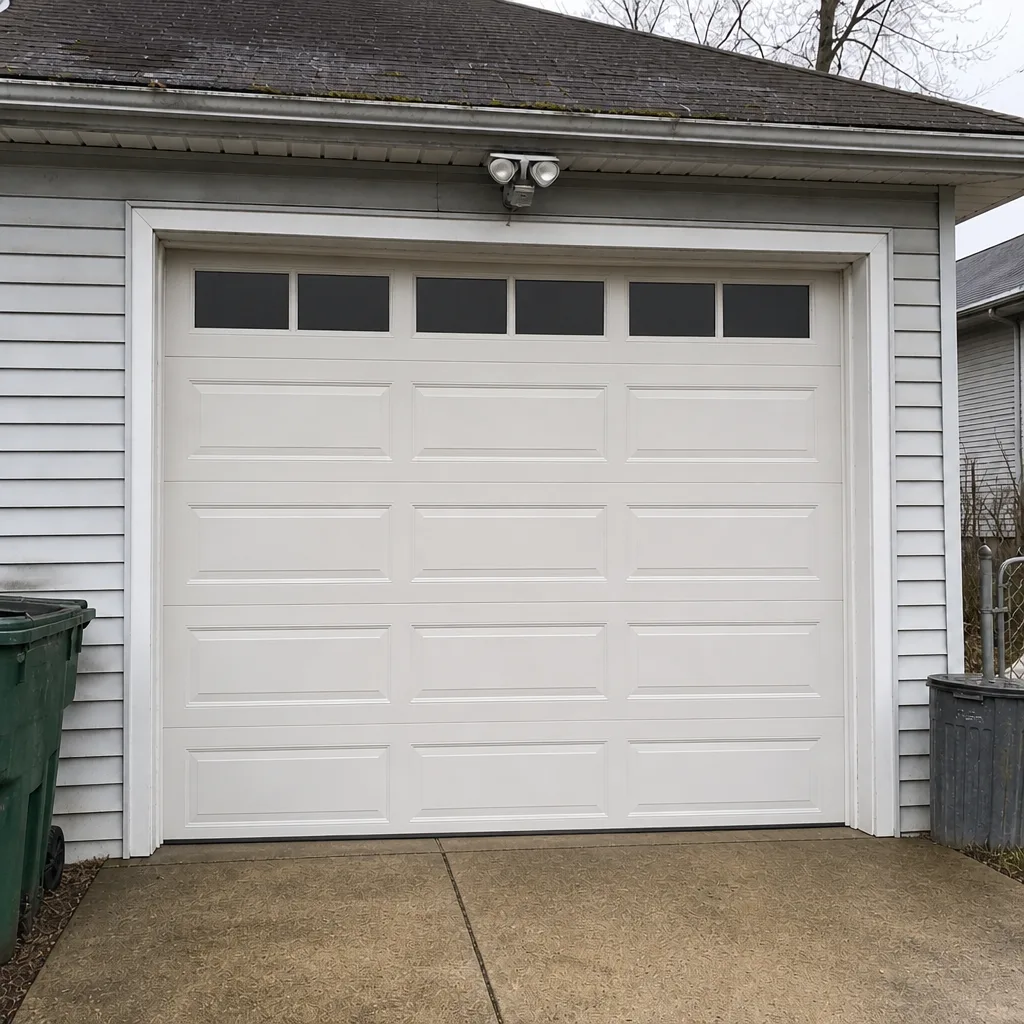 After
When to Call a Professional
Call us if any of these are true: the door won’t lift without the opener straining, the door is off its tracks, a cable is broken or slack, a torsion spring has a visible gap or has made a loud bang, the door reverses without obstruction, or you’re hearing any of the sounds in the index above more than once a week. None of these are “wait and see” situations. We handle all five core services under one company – repair, opener repair, spring repair, installation and emergency response – and our technicians have up to 14 years of experience across Wayne Dalton, LiftMaster, Raynor, Craftsman and the other brands we service. West Park Garage Door Repair Pros offers free estimates in West Park – call (855) 658-4098. We answer 24/7. Fast dispatch from 7am to 7pm, Sunday through Friday.
Frequently Asked Questions
The most common warning sign is a door that hesitates before moving or a spring with a visible coil gap. Both point to a torsion spring that’s lost tension – the single most common mechanical failure in a West Park garage door. If you’re seeing either, call us for a free estimate before the spring breaks.
Sometimes, yes. A visible gap of a half inch or more between coils, a door that’s noticeably heavier to lift, and a single loud pop when the door first moves are all pre-failure signs. A spring can also break with no warning at all, which is why we recommend an inspection if the spring has more than about seven years of use. Call (855) 658-4098 and we’ll take a look – estimates are free.
Cold-weather stiffness is normal in a West Park January – the metal contracts, the grease thickens, and a single stiff cycle is expected. The same slow running in July is not normal and usually points to a worn spring or a failing opener motor. If the door hesitates in summer, that’s the moment to check it.
Usually not. The opener is reversing because it’s detecting resistance it doesn’t expect. Causes include a dirty safety beam lens, a binding track, a warped bottom panel, or an out-of-alignment photo-eye. On Craftsman and Genie units, a drift in the travel limits can also cause false reversals. Diagnose the door first, then the opener. Call (855) 658-4098 for an exact quote on either repair.
No. The price we quote is the price you pay – it’s set by the written estimate and agreed before any work starts. If the diagnosis turns up something else, we’ll tell you what it is and what it costs, and you decide whether to proceed. No surprises on the invoice.
Yes – the local professional who comes to your West Park home is state-licensed and insured as their state requires. Our technicians have up to 14 years of experience, and they’re trained on all eight brands we service. Call (855) 658-4098 for an exact quote – estimates are free.
The Bottom Line
Garage doors don’t fail without warning. They hesitate, they grind, they pop, they slow down, and they develop visible gaps long before a spring snaps. This guide gives you the map: which sounds mean what, which visual signs matter, and which symptoms need attention today versus next week. In West Park, the biggest divide is seasonal – what’s normal in January is a warning sign in July. Learn to read the door, run the seasonal checklist, and you’ll catch nearly every failure before it becomes a trapped car, a bent track or a full replacement. When you’re unsure, call (855) 658-4098. We answer 24/7. Fast dispatch from 7am to 7pm, Sunday through Friday.
Written by the team at West Park Garage Door Repair Pros.